
Why Does Commercial Solar Equipment Fail? A Guide to Emergency Repairs
Quick Answer
Inverter overload, faulty wiring and cabling, environmental wear and tear, aging components, and installation issues cause commercial solar equipment failures. When you notice the signs and call for emergency commercial solar repair, you can avoid downtime, which can cost you money. A small, apparent malfunction does not have to shut down the entire system.
A commercial solar array is not just a bigger version of a residential rooftop system. It's a serious investment that encompasses thousands of panels, dozens of inverters, and miles of wiring. When one piece breaks down, production drops seriously hard and fast.
An event that doesn't happen commercially often shows up as a dip on the dashboard, or a call from the nervous facility manager asking why output fell overnight. Being aware of what normally fails and when to ask for emergency commercial solar repair, often makes the difference between a short pause and a very costly shutdown.
The Scale and Complexity Behind Commercial Solar Arrays
Commercial setups are much larger in scale, voltage, and design than residential setups. More parts are exposed to wear under heavier loads. A typical array has a few core components, such as:
Central or string inverters
DC and AC wiring
Ground-mount or rooftop racking
Combiner and disconnect boxes
Remote monitoring systems
Transformers and switchgear
What Sparks Commercial Solar Fire Incidents?
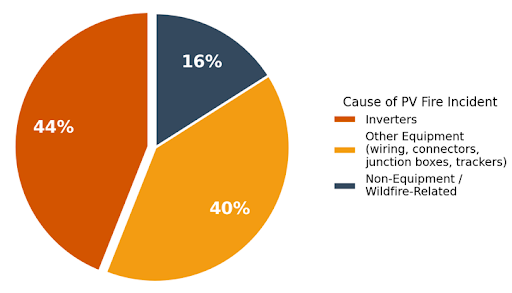
Each component is under continuous electrical stress, and any one of them can become a new failure mode that needs commercial rooftop solar repair before it spreads.
The Leading Causes of Commercial Solar Equipment Failure
Recognizing a breakdown gives teams insight into a problem long before it occurs.
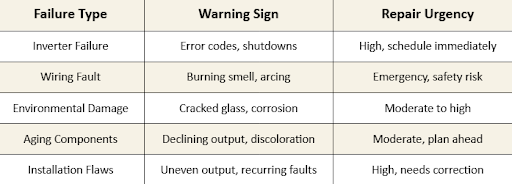
Inverter Overload and Failure
Because commercial inverters run 24/7 and cycle through loads throughout the day, they work harder. Once the cooling features or internal circuitry fail, the full array can lose power quickly.
Signs an Inverter Is Failing:
Repeated error messages or crashes
The inverter housing is abnormally hot.
Reports of output suddenly dropping
The fans are either continuously running or completely off
Emergency Response Tip:
If an inverter fails, the entire string goes offline, and delaying service often increases commercial solar system repair costs as lost production keeps accumulating.
Wiring and Electrical Faults
In larger systems, wiring failures are typically caused by loose connections, insulation degradation, and rodent damage. If these small faults aren't resolved, they could lead to arc flash or circuit failure.
Warning Signs to Catch Early:
A burning smell near junction boxes
Scorching marks or melted shell we can see
The monitoring system is showing readings that rapidly rise and fall
Repeatedly tripping breakers
Emergency Response Tip:
Use professional commercial solar troubleshooting services to identify the source rather than the symptom, since electrical faults can cause serious fires.
Environmental and Weather Damage
Hail, high winds, and extreme heat can damage panels, mounting hardware, and enclosures. Salt air exposure also causes higher rates of corrosion in coastal or industrial sites
Signs of Weather-Related Damage:
Broken panel glass
Mounting brackets either bent or loose
Metal casings are rusty or corroded
Water penetration within electrical casings
Emergency Response Tip:
After any storm damage occurs, an inspection should always take place. Scheduling solar panel repair and maintenance early can prevent a hidden issue from becoming a bigger, more costly failure.
Aging Components and Wear
Every element has an operational lifespan, and commercial rigs often run continuously for up to 10 years or more before major parts need replacement. Usually the signaling of progressive wear doesn’t happen until the output has slipped.
Signs Equipment Is Wearing Out:
Energy output declining steadily
Wiring insulation that is brittle or discolored
Minor faults become more frequent
Increasing frequency of maintenance calls
Emergency Response Tip:
It is almost always cheaper to replace an old part than to incur a breakdown that stops production at peak demand.
Installation Flaws and Design Errors
Not every failure is due to wear or weather. Over the years, undersized wiring, bad grounding or mismatched components can gradually lead to recurring issues that maintenance can never truly resolve.
Signs of an Installation Problem:
Inconsistent production across similar arrays
Problems occurring repeatedly in the same area
Parts scored under series standards
Inconsistencies in grounding or bonding
Emergency Response Tip:
An expert team can trace these problems to their source rather than just treating the same symptom.
What Comes Next for Your Commercial Solar System
Commercial solar failures rarely happen without warning, and businesses that watch for small changes avoid expensive downtime. Regular inspections and a fast response protect your bottom line.
Solar Repair Maintenance specializes in fast, reliable emergency repairs for commercial solar systems of every size, backed by technicians who understand large-scale installations. Contact us today to get your system back online before a small issue becomes a major loss.
Frequently Asked Questions
How quickly should a commercial solar emergency be addressed?
Most electrical or fire-related faults need attention within hours, while performance issues can wait a day or two.
Can a business operate safely while waiting for repairs?
It depends on the fault. Wiring or overheating issues often require shutting down that section until a technician arrives.
Does insurance typically cover emergency solar repairs?
Many commercial policies cover storm or equipment damage, but coverage details vary, so check your specific policy.